


 Nikki Rabbit
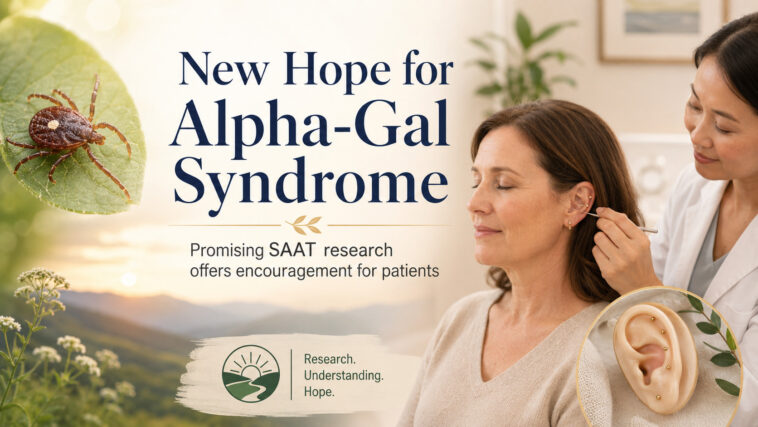
For hundreds of thousands of Americans living with Alpha-Gal Syndrome, a growing tick-triggered allergy to red meat and other mammal-derived products, new attention around a promising treatment approach is offering something many patients have been waiting for: hope.
Alpha-Gal Syndrome, often called AGS, is a real and increasingly recognized condition most commonly associated with tick bites, especially the lone star tick. The allergy can cause delayed reactions after eating beef, pork, lamb, venison, dairy, gelatin, or other mammalian products. For some, symptoms may be mild. For others, the condition can lead to serious reactions, including anaphylaxis.
The scale of the problem is larger than many people realize. The CDC reports that more than 110,000 suspected cases were identified from 2010 through 2022, while estimating that as many as 450,000 people in the United States may be affected because many cases likely go undiagnosed.
That is why renewed attention around Soliman Auricular Allergy Treatment, known as SAAT, is encouraging news for patients and families searching for answers.

A peer-reviewed 2021 case series published in Medical Acupuncture examined SAAT as a treatment approach for Alpha-Gal Syndrome. The study reviewed 137 patients treated at two U.S. clinics. Among the 126 patients with follow-up data, 121 reported symptom remission after treatment, meaning they were able to reintroduce mammalian foods without reactions. That equals a reported remission rate of 96%. The authors also noted that no adverse reactions were reported from the auricular acupuncture procedure itself.
For anyone who has lived with the fear and frustration of Alpha-Gal Syndrome, those numbers are understandably exciting.
SAAT is a specialized form of auricular acupuncture. In simple terms, the treatment involves identifying a reactive point on the ear and placing a tiny needle that remains secured for a period of time, often around three weeks. It does not involve eating, injecting, or exposing the patient directly to alpha-gal. Instead, it is intended to work through a targeted acupuncture-based method.

The most encouraging part of this story is not just the percentage reported in the study, but what it could mean for real people. Alpha-Gal Syndrome can dramatically change daily life. Grocery shopping becomes stressful. Restaurant meals become risky. Family dinners, cookouts, holidays, travel, and even medications or personal care products may require constant caution. A treatment that could help even a portion of patients safely regain normalcy would be meaningful.
At the same time, it is important to celebrate this news responsibly. The 2021 SAAT study was a retrospective case series, not a randomized controlled trial. That means it looked back at patient outcomes rather than testing the treatment against a control or placebo group. The results were also based largely on patient-reported outcomes, and the authors themselves called for additional prospective trials with laboratory confirmation before and after treatment.
That does not make the findings meaningless. It means they are promising and worthy of deeper research.
For patients who have felt dismissed, confused, or trapped by Alpha-Gal Syndrome, this study offers a bright spot. It shows that dedicated clinicians and researchers are looking for solutions beyond simple avoidance. Current mainstream management still focuses on avoiding triggering foods and products, carrying epinephrine when appropriate, and working closely with a knowledgeable medical provider. But the SAAT findings suggest there may be more tools worth investigating.
The growing awareness around Alpha-Gal Syndrome is also good news. More people are learning that a tick bite can lead to a serious food allergy. More doctors are recognizing the condition. More patients are getting tested. And now, more attention is being placed on potential treatment options that could improve quality of life.
The takeaway is hopeful: Alpha-Gal Syndrome is real, it is growing, and it deserves serious attention. SAAT is not yet a universally proven cure, but the published results are encouraging enough to justify optimism and further study.
For the Alpha-Gal community, this is more than a medical headline. It is a reminder that answers may still be ahead; and for many families, that hope matters. And hope, just makes commons sense. Wouldn’t you agree?
Don’t just take our word for it…
Study Reports 96% Remission Rate of Alpha-Gal Syndrome with Novel Desensitization Technique
With nearly 500,000 Americans now affected by tick-induced meat allergy, a peer-reviewed study reports almost unbelievable results using Soliman Auricular Allergy Treatment (SAAT). Enjoy… pic.twitter.com/HBVfPL4Yvn
— Peter A. McCullough, MD, MPH® (@P_McCulloughMD) May 30, 2026