

 The Ripon Rabbit
With Election Day approaching, Wisconsin’s municipal and county clerks find themselves navigating an increasingly complicated intersection of state election laws, federal directives, and voter registration responsibilities.
A newly circulated public information briefing, titled Wisconsin Election Guidance & Voter Roll Integrity, seeks to bring these concerns into focus while providing local officials with legal references, historical context, and community resources.
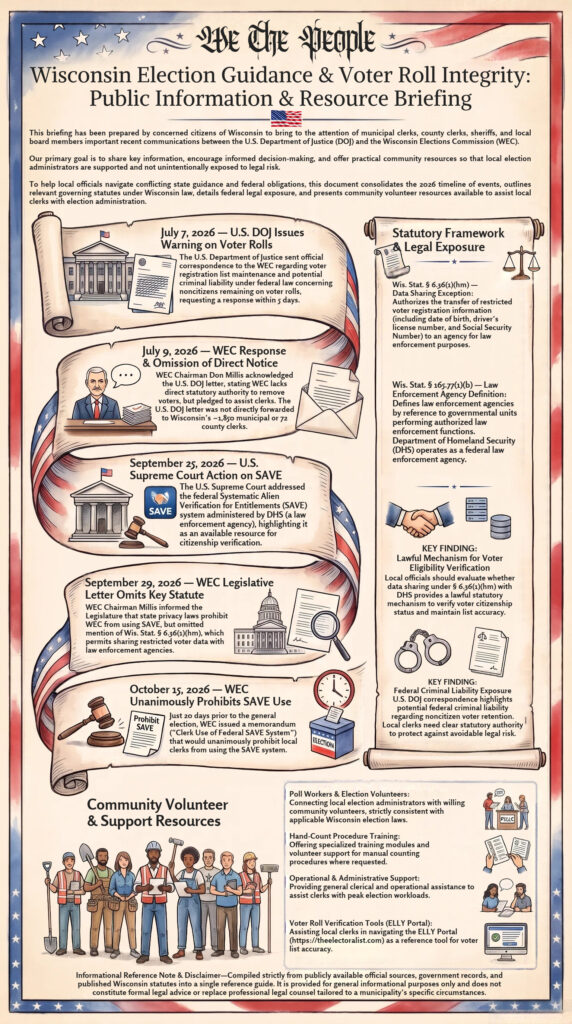
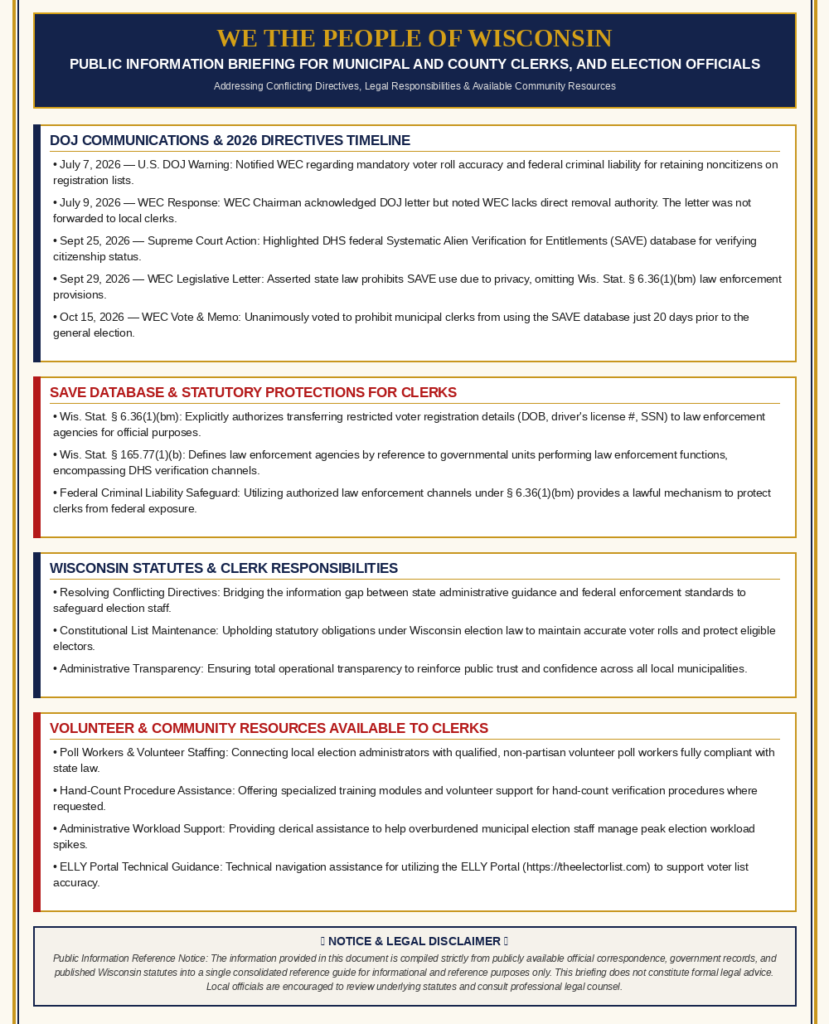
The briefing highlights a series of developments beginning July 7, 2026, when the U.S. Department of Justice warned state election officials about potential federal criminal liability associated with knowingly retaining ineligible noncitizens on voter registration lists.
The situation became more complicated on September 25, when the U.S. Supreme Court temporarily permitted expanded use of the federal SAVE citizenship verification system. However, on October 15, the Wisconsin Elections Commission approved guidance advising municipal clerks that Wisconsin’s voter privacy protections prevent them from using SAVE as currently configured.
At the heart of this issue is an important question: How can local election officials fulfill their legal responsibilities when state guidance and federal expectations appear to be pulling in different directions?
The briefing draws particular attention to Wisconsin Statute § 6.36(1)(bm), which permits certain restricted voter registration information to be shared with law enforcement agencies for authorized purposes. Whether that provision offers a practical legal pathway for citizenship verification remains a question requiring careful legal examination.
Beyond identifying potential conflicts, the briefing emphasizes community involvement. It outlines opportunities for volunteer poll workers, administrative assistance, election procedure training, and voter roll research resources.
Why does this matter?
Because public confidence in elections depends on more than simply counting ballots correctly. It also depends on accurate voter rolls, consistent application of the law, protection of eligible voters, and election officials having the information and resources necessary to perform their duties.
This briefing should not be mistaken for an official legal directive or a substitute for professional legal counsel. Rather, it provides a starting point for informed discussion, further investigation, and constructive engagement between citizens and those entrusted with administering Wisconsin’s elections.
Election integrity should never be a partisan privilege. It is a public responsibility.
And with November 3 approaching, the time for asking questions, examining the statutes, and supporting the officials responsible for administering our elections is now.
The citizen who shared this, believes these issues deserve greater public attention. We are sharing this information in the interest of transparency and public awareness, without presenting the briefing’s allegations or legal conclusions as established facts. Wisconsin voters deserve accurate information, clear legal guidance for election officials, and an opportunity to examine questions affecting public confidence in their elections.
An informed public, accountable institutions, and transparent election procedures are essential to preserving the trust of We the People.