



 The Ripon Rabbit
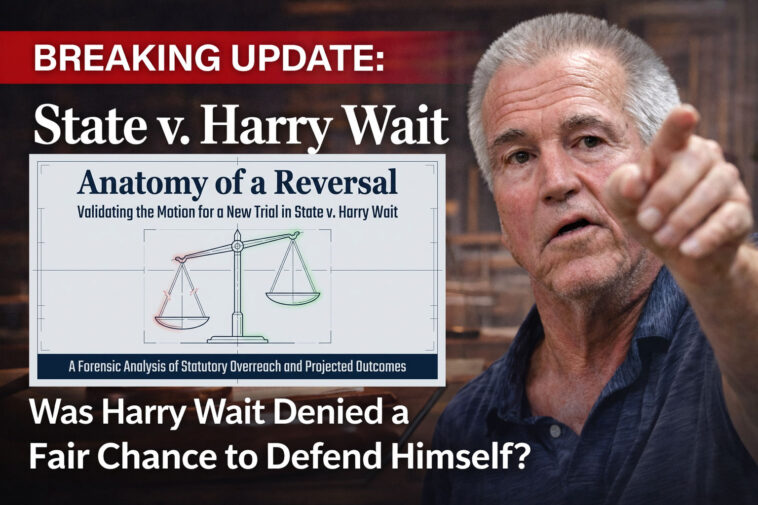
EXCLUSIVE REPORT: After Reviewing the Filed Motion in State v. Harry Wait, Here Are Key Takeaways
Yesterday we broke the news of the newly filed motion for a new trial in State of Wisconsin v. Harry E. Wait and the motion, makes one thing unmistakably clear: this case is no longer just about a verdict.
It is now about whether that verdict was built on a theory the law does not actually support; and whether Harry Wait was given a fair chance to defend himself against it.
My first takeaway is that the defense is not arguing over some harmless technicality. It is making a direct attack on the legal foundation of the conviction.
At the center of that argument is the State’s use of “personal satisfaction” as the alleged “thing of value or benefit” under the statute. The motion argues that Wisconsin law contemplates something concrete and objectively recognizable; not an internal emotional state.
That is what makes this filing so important. According to the motion, the State could not prove Harry Wait sought the absentee ballot as a traditional thing of value, so it pivoted to a much weaker theory: that he somehow benefited from the personal satisfaction of getting it.
The defense argues that this is not a lawful reading of the statute at all. If that argument is correct, then the conviction may rest on a theory that never should have gone to the jury in the first place.
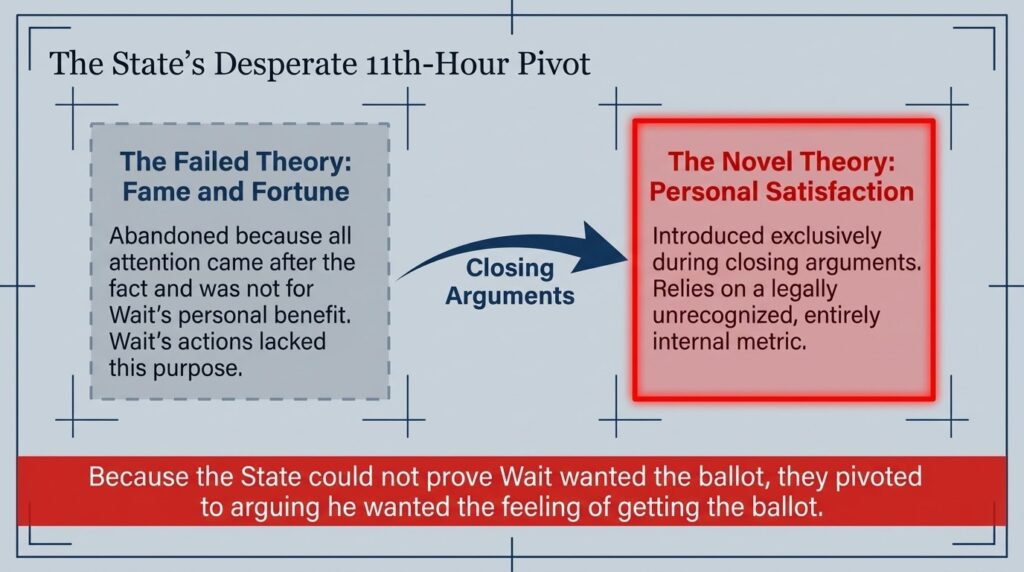
Another key takeaway is that the motion does more than attack the theory itself. It attacks the timing of when that theory was used. A major issue now emerging is whether Harry Wait was ever given a meaningful chance to defend himself against the “personal satisfaction” allegation at all.
The argument is simple but powerful: if that theory did not truly surface until closing argument, then the defense had little or no fair opportunity during trial to rebut it with evidence, testimony, or focused legal argument.
That transforms this from a narrow legal dispute into a potential due-process issue.
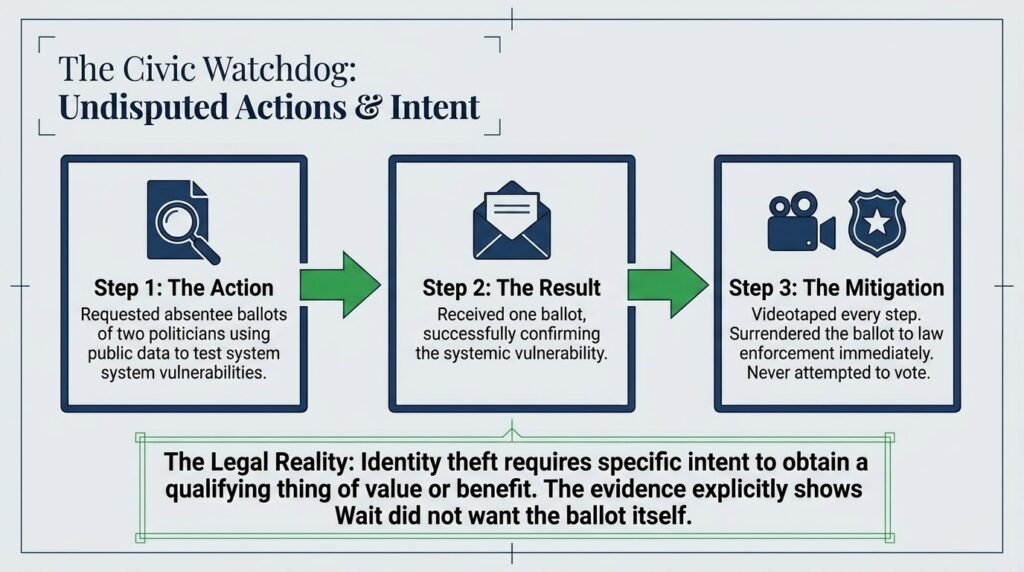
The defense filing also tries to reclaim the question of intent. It presents Wait not as someone trying to steal a concrete benefit for personal gain, but as a civic watchdog testing a system vulnerability.
Harry admitted to ordering the ballots in an email to the D.A., sheriff, Vos, Mason, Rep. Brandtjen, and Rep. Rathum at 3:13 AM. Harry’s email to the authorities occurred before Harry received Mason’s ballot.
According to the motion, he requested absentee ballots using public data, received one ballot, confirmed the weakness, surrendered the ballot to law enforcement, and never attempted to vote it.
The motion uses those facts to argue that Wait did not want the ballot itself as a benefit, and that the State’s theory had to be stretched to secure a conviction.
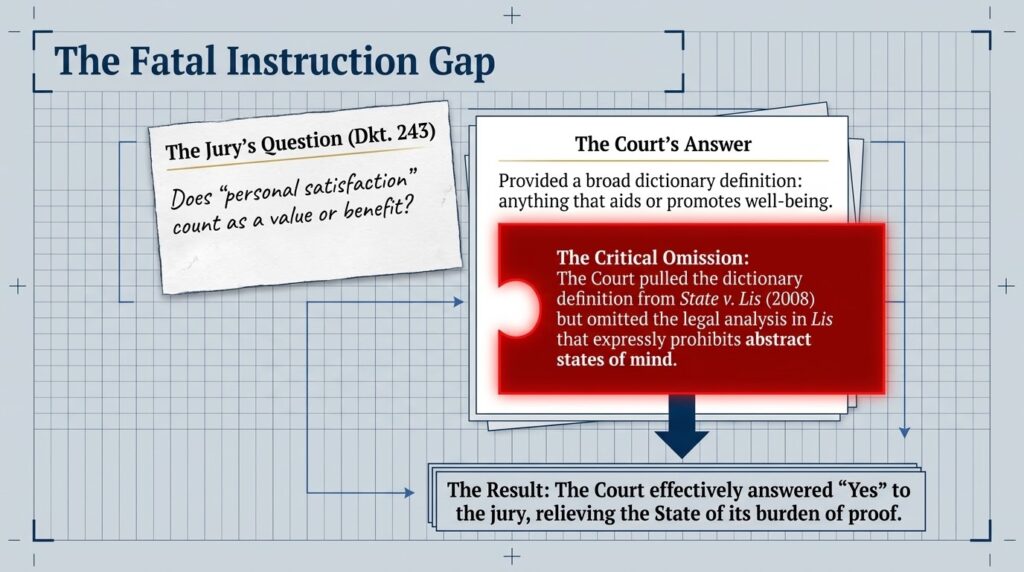
That matters because juries do not ask questions like that by accident. That question suggests the jury was wrestling with the exact weakness at the center of the State’s case.
Having an additional conversation and commentary with Jay Stone President of H.O.T. Government, there is another major issue that deserves public attention: whether Harry was ever given a meaningful chance to defend himself against the “personal satisfaction” theory at all.
That is not a minor side point. That could be one of the most important due-process questions in the entire case.
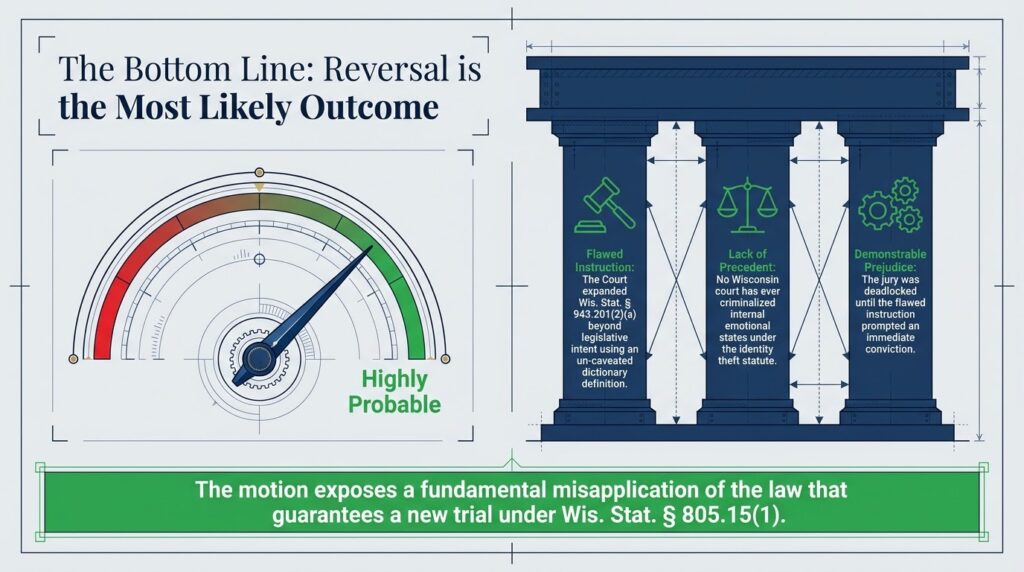
The motion points to the jury’s reported question about whether personal satisfaction counts as a value or benefit. That question matters because it shows the jury was struggling with the exact issue at the center of the State’s theory.
The defense argues that instead of shutting that theory down, the court answered with broad dictionary language while omitting the legal limits that should have framed the issue. In the defense’s view, that answer effectively told the jury “yes,” and may have steered the verdict.
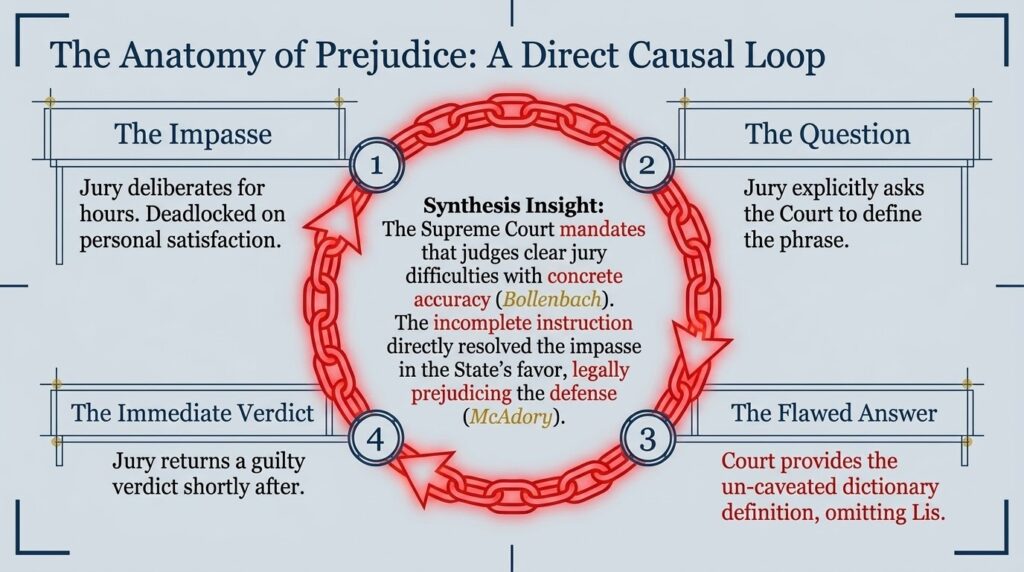
That sequence is what gives the motion real force. The State leans on “personal satisfaction.” The jury asks about it directly.
The court’s answer arguably validates it. Then the guilty verdict follows.
The defense says that is not harmless error; that is prejudicial error, because the jury may have convicted on a theory the statute does not truly permit.
And if Harry never had a fair chance to defend against that theory before it became instruction-sanctioned, that raises an even deeper fairness problem.
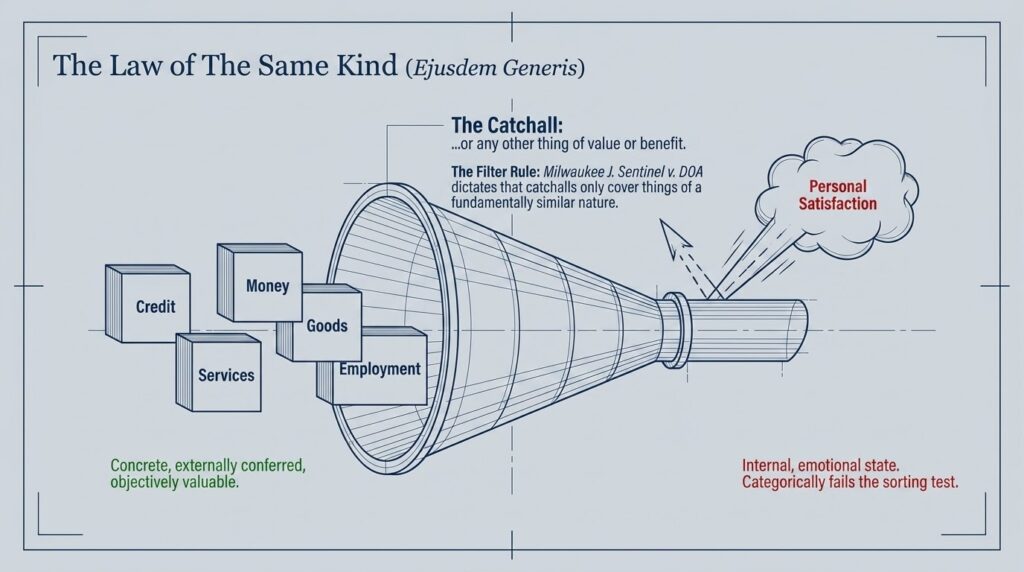
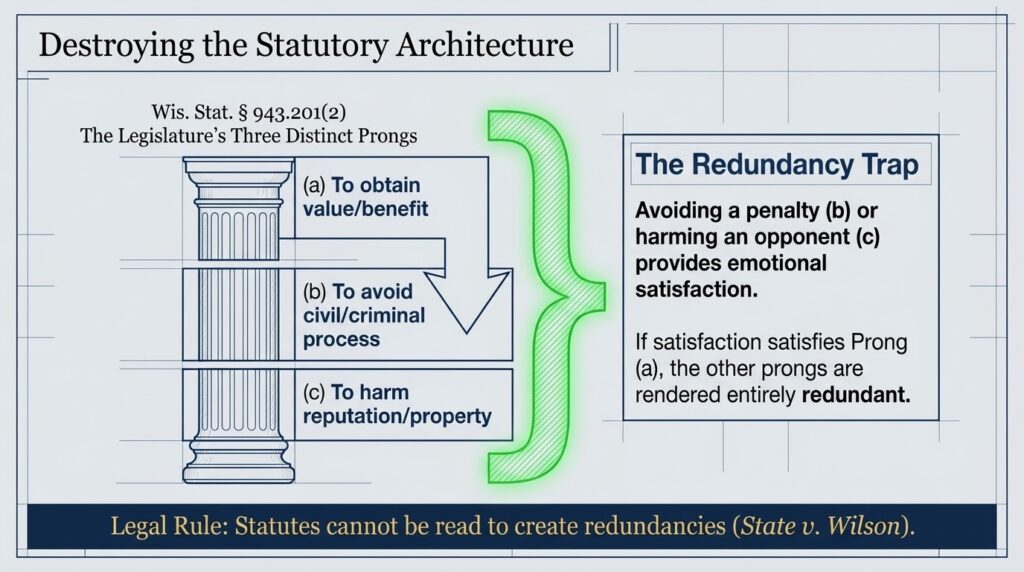
The motion also makes a broader statutory argument that should not be ignored. It says Wisconsin law lists concrete categories like credit, money, goods, services, and employment for a reason. Under that reading, the catch-all phrase must be understood in the same kind of concrete, externally conferred terms.
“Personal satisfaction,” the defense argues, does not fit. Worse, if it does fit, the statute’s separate prongs begin to collapse into redundancy. In other words, the State’s reading would not just stretch the law; it would effectively rewrite it.
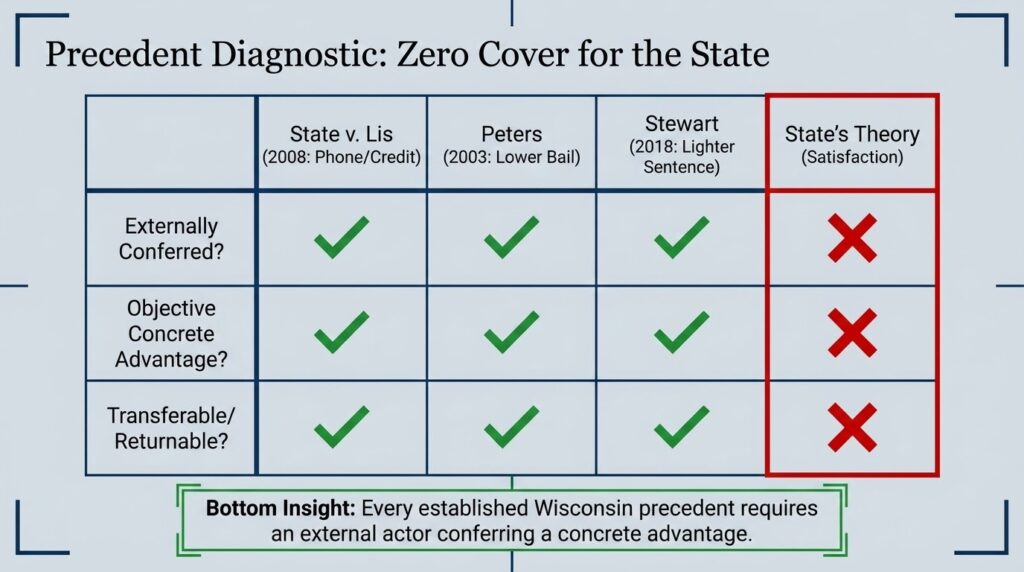
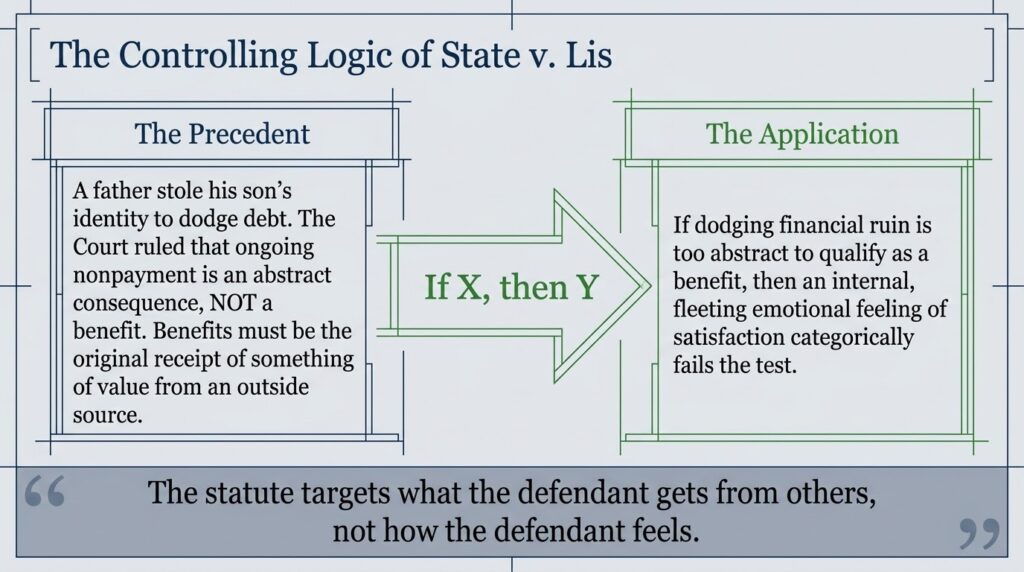
The defense further argues that Wisconsin precedent cuts against the State’s position. The motion emphasizes that prior cases involved concrete, externally conferred advantages; not private emotional gratification.
That is a critical distinction. The motion’s point is blunt: existing case law may provide no real cover for treating “personal satisfaction” as the kind of benefit needed to sustain this conviction.
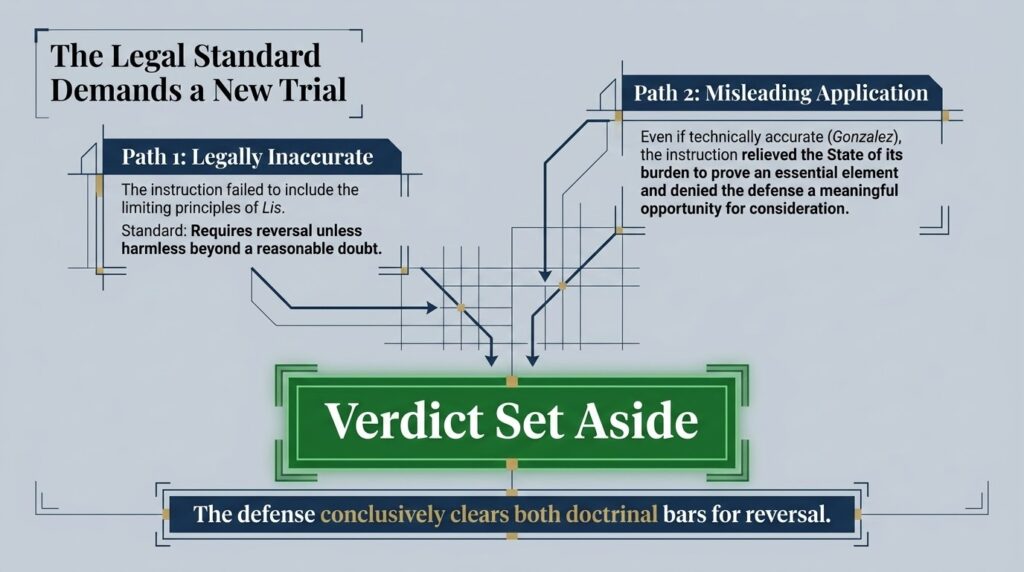
After reviewing the motion, my overall takeaway is this: this is not a flimsy filing. It is a serious, structured challenge that attacks the verdict from multiple angles; statutory meaning, jury instruction error, prejudice, and the possibility that Harry Wait was denied a meaningful opportunity to defend himself against the very theory that may have carried the case.
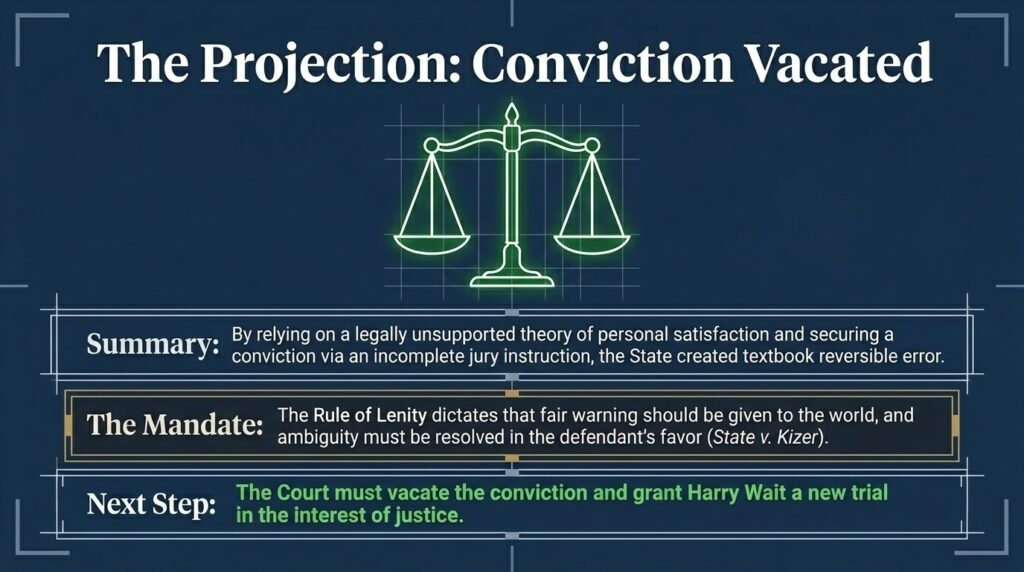
This case is now about much more than what the jury decided. It is about whether the conviction was obtained on a theory the law does not support, and whether the defense was given a fair chance to meet that theory before the jury was effectively invited to rely on it. Answering this question honestly just makes common sense, wouldn’t you agree??
Stay tuned. This story is still developing.
Leave your reaction and comments below.
FILED MOTION CAN BE VIEWED BELOW:
UPDATE: JOIN THE LIVE DISCUSSION TONIGHT AT 8PM